The Men in Black (SUVs): What Your Favorite Star's Bodyguard Saw and Will Never, Ever Tell You

Imagine having a front-row seat to the most chaotic, compromising, and occasionally criminal behavior that wealth and fame can produce — and then being legally prohibited from describing any of it, ever, to anyone, for the rest of your natural life, under penalty of financial consequences so severe they would make your eyes water. That is the professional reality of the celebrity bodyguard. They are, functionally, the most over-informed, under-acknowledged, and comprehensively silenced workforce in America. And some of them, very carefully, are starting to talk.
Not fully. Not on record. Not in ways that would trigger the clauses buried in the documents they signed before they ever set foot inside a celebrity's home or climbed into the back of a blacked-out Escalade. But in hints, in implication, in the careful language of people who have memorized exactly where the legal lines are — because they've had those lines explained to them by very expensive attorneys who were not, to be clear, on their side.
Lurid Digs spoke with four former security professionals — two who described themselves as former personal protection agents, one who worked in venue security at the highest levels of the entertainment industry, and one who spent years embedded with a touring music act — to assemble the most complete picture we legally can of what goes on in the spaces that publicists never photograph.
The Intimacy of the Job Nobody Talks About
The fundamental paradox of celebrity security work is that it requires an almost total dissolution of professional distance. A bodyguard who maintains a respectful arm's length cannot do the job. They must be close — physically, logistically, informationally close — in ways that make genuine privacy between client and protector essentially impossible.
"You know everything," said one former agent, who spent several years protecting a household-name entertainer before transitioning to corporate security work. "You know their schedule before their spouse does. You know who they're actually calling when they say they're calling their manager. You know what they look like at four in the morning when everything has gone wrong. There is no version of this job where you don't know everything."
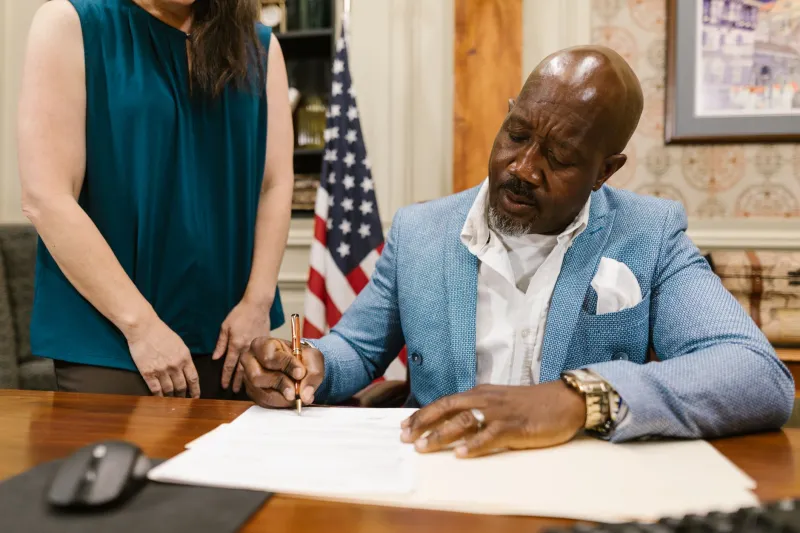
That intimacy is, by design, managed through legal architecture. The non-disclosure agreements that security staff sign are, by multiple accounts, among the most comprehensive NDAs in any industry — broader in scope, longer in duration, and more aggressively enforced than those signed by personal assistants, household staff, or even some former romantic partners. They cover not just specific incidents but categories of information, not just named individuals but unnamed associates, not just the past but the ongoing present.
"Mine covered things I hadn't even witnessed yet," one source said, with a laugh that contained approximately zero humor. "Future observations. I signed away my right to discuss things that hadn't happened."
What the Agreements Are Designed to Bury
Without attributing specific incidents to specific individuals — because we would like to remain a functioning publication — the categories of information that former security professionals describe being prohibited from discussing paint a fairly comprehensive portrait of the celebrity industrial complex at its most unguarded.
Affairs are, by multiple accounts, the most routine item on the list. The logistics of a celebrity maintaining a relationship outside their public partnership require security involvement almost by definition — transportation, location scouting, the management of encounters that cannot be photographed. Security staff are not just witnesses to these arrangements; they are frequently the operational backbone of them. "You're not just seeing it," one source said carefully. "You're facilitating it. And then you're signing something that says you never did either."
Substance issues are another recurring theme, described in the vague but pointed language of people who are choosing their words with surgical precision. The entertainment industry's relationship with addiction is well-documented in the abstract; the specific, granular, witnessed reality of that relationship is something that protection staff encounter with a frequency that several sources described as genuinely distressing.
"You watch someone destroy themselves," one former touring security professional said quietly. "And your job is to make sure they destroy themselves safely, and that nobody photographs it, and that you never describe what you saw. That's the job."
The Power Imbalance Hiding in Plain Sight
There is a structural injustice embedded in the celebrity NDA system that becomes particularly visible when you examine the security sector specifically. These are workers who are, in many cases, former law enforcement or military — people with professional backgrounds that carry their own ethical obligations around witnessing misconduct. They are placed in situations where those obligations conflict directly with the contractual obligations their employer has imposed.
What happens when a bodyguard witnesses something that isn't just embarrassing but actually illegal? The answer, according to sources and legal experts who study NDA enforcement, is deeply uncomfortable. NDAs cannot, technically, prohibit the reporting of criminal activity to law enforcement — that's an established legal principle. But the practical reality is that the financial penalties for any disclosure, combined with the ambiguity about what constitutes protected reporting versus punishable breach, creates a chilling effect that functions as a near-total silence mechanism.
"You're told, explicitly or implicitly, that any disclosure — any — triggers consequences," said one employment attorney who has represented former entertainment industry staff in NDA disputes. "People don't parse the fine print about law enforcement exceptions when they're afraid of losing their house."
The Hinting Economy
In the absence of the ability to speak freely, former security professionals have developed what might be called a hinting economy — a system of implication, omission, and carefully constructed non-denial that allows them to communicate volumes while technically saying nothing actionable.
It surfaces in podcast appearances where a former bodyguard describes "the kinds of things" that happen on tour without naming names, in social media posts that reference "what I could tell you" without telling you, in memoir passages that describe composite characters assembled from real experiences. It's a language that everyone in the industry understands and that NDAs are, interestingly, not quite comprehensive enough to prohibit.
"I can tell you that I have seen things that would change how you feel about certain people," one source told us, and then smiled in a way that suggested the sentence was complete and would remain so.
The Question Nobody in Hollywood Wants Asked
The deeper issue — the one that sits beneath the gossip and the jaw-dropping anecdotes and the legally careful implications — is whether the NDA system as applied to security staff constitutes a legitimate business protection mechanism or a structural tool for suppressing accountability.
When a celebrity's behavior rises to the level of genuine harm — to themselves, to others, to the people around them — and the witnesses to that behavior are comprehensively silenced by legal agreements signed under economic pressure, the question of who is being protected and from what becomes genuinely important. Not just for gossip purposes. For actual, boring, civic purposes.
The bodyguards know. They always know. They're standing right there, two feet away, watching everything unfold through the practiced neutral expression of someone who signed something they now deeply regret.
And somewhere in a lawyer's office, there's a document with their name on it, making sure you never find out what they saw.
For now.