Post, Regret, Delete, Repeat: The Celebrity Social Media Meltdowns That Broke the Internet and Their Careers Simultaneously
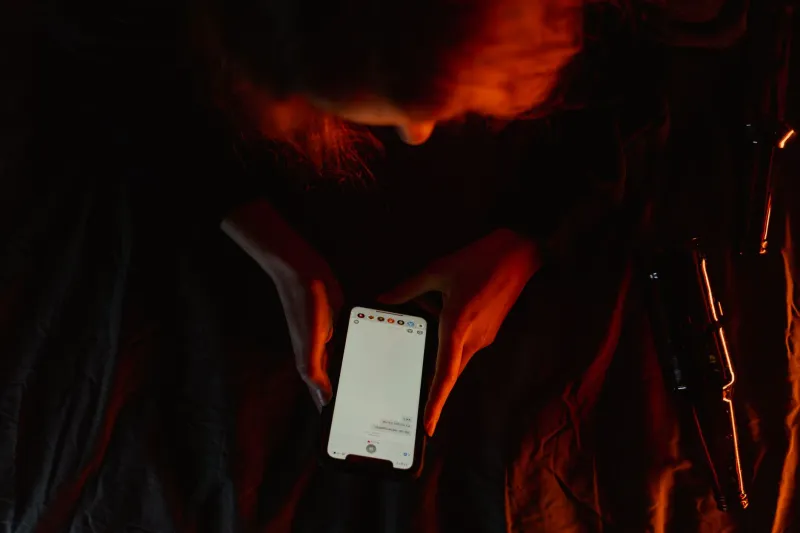
Somewhere in the brief, glorious window between posting something truly unhinged and the moment a publicist physically removes your phone from your hands, a celebrity becomes, for one shining instant, completely and totally themselves. No filter. No media training. No carefully workshopped response to a question nobody actually asked.
Just vibes. Terrible, career-detonating, screenshot-worthy vibes.
We have catalogued them. We have analyzed them. We have, frankly, enjoyed them more than we probably should. Here is what we found.
The Anatomy of a Celebrity Meltdown (A Brief Scientific Overview)
Before we get to the specifics, it's worth understanding the lifecycle of a celebrity social media implosion, because they follow a pattern so consistent it could be taught in a communications school — as a warning, presumably, rather than a template.
Phase one: the inciting incident. This is usually something small. A bad review. A rumor. A comment section that the celebrity in question has been specifically advised by multiple professionals to stop reading. Phase two: the response, posted between the hours of 11 PM and 4 AM, in a font size that suggests the author's thumbs were moving faster than their judgment. Phase three: escalation, in which the celebrity, having received pushback on the original post, doubles down with the commitment of someone who has genuinely nothing left to lose. Phase four: deletion, followed by a statement from a publicist describing the posts as "taken out of context" — a phrase that does not technically apply to anything that was posted as a standalone statement in its own context. Phase five: the apology, which arrives approximately seventy-two hours later and satisfies approximately nobody.
Let us apply this framework to some real-world case studies.
The Feud That Escalated Into an Unintentional Manifesto
It started, as so many things do, with a perceived slight. A celebrity — let's say they were primarily known for a franchise that had, at the time, three installments and a merchandise line — took issue with a comment made by a fellow industry person in an interview they had clearly been reading at an hour when no good decisions get made.
The initial response post was aggressive but coherent. The second post, arriving forty minutes later, introduced several new grievances that had apparently been building for some time. The third post — and this is where it became something genuinely special — pivoted from the original feud entirely and began addressing the state of the entertainment industry, the nature of loyalty, and, in a paragraph that is still quoted in certain corners of the internet, the specific ways in which the celebrity felt they had been "spiritually betrayed" by people who "know exactly who they are."
Nobody knew who they were. That was the consensus.
The thread was deleted by 7 AM. By 7:15 AM, it had been screenshotted approximately forty thousand times. By noon, it was a meme. By the following week, it was a case study in a crisis communications firm's internal training materials. We know this because someone who works at that firm told us, and we appreciated the specificity.
The One That Revealed What They Actually Think About Fans
Fan relationships are the carefully maintained fiction at the heart of celebrity culture. The star loves the fans. The fans love the star. Everyone performs this arrangement with mutual enthusiasm, and it works beautifully right up until the moment a star's private opinion of their fanbase becomes, briefly, public.
The incident in question involved a complaint — legitimate, in isolation — about a specific type of fan behavior at a public appearance. The complaint, had it been worded differently, might have generated some sympathy. It was not worded differently. It was worded in a way that made clear the celebrity had thoughts about their fans that went considerably beyond the specific incident being described, and that those thoughts had been accumulating for some time.
The phrase "parasocial delusion" appeared. The phrase "you don't actually know me" appeared. The phrase — and this one really did the damage — "I am not your friend and I have never been your friend" appeared, which is technically true and also catastrophically ill-advised to put in writing at eleven forty-five on a Wednesday night.
The post was up for twenty-two minutes. The fandom never fully recovered. Neither, to be frank, did the touring revenue.
The Brand Partnership That Became a Liability in Real Time
This one is a particular Lurid Digs favorite because it involves the additional layer of a corporate entity watching helplessly as their sponsored celebrity unraveled in public while their product was still in the celebrity's bio link.
The timeline: celebrity posts sponsored content at 6 PM (professionally lit, appropriately hashtagged, FTC disclosure included). Celebrity gets into an argument in the comments of an unrelated post at 9 PM. Argument escalates. By 10:30 PM, the celebrity is posting, from the same account that still has the brand partnership in the bio, content that the brand's social media team is refreshing with increasing anxiety. By midnight, the brand has quietly removed the celebrity from their website. By 2 AM, the celebrity has posted something that causes the brand to issue a statement.
The statement used the phrase "we hold our partners to a high standard."
The celebrity responded to the brand's statement. On social media. At 2:15 AM.
The partnership was terminated. The posts were deleted. The brand recovered. The celebrity did not, immediately, recover — though they have since pivoted to a podcast where they discuss "authenticity," which we acknowledge contains a certain poetry.
The Apology That Made Everything Worse
No roundup of social media disasters is complete without acknowledging the second-order disaster: the apology that, through some combination of tone, timing, and spectacular misreading of the room, manages to reignite the original controversy while simultaneously creating new ones.
The gold standard of this particular genre involves a celebrity who, having posted something genuinely problematic, issued an apology that began with the word "If" — a construction that is, at this point, universally understood to signal that the apologizing party does not believe they have done anything requiring an apology. The apology then pivoted, mid-paragraph, to discussing the celebrity's own emotional state during the original incident, which is a rhetorical choice that tends not to land well with people who feel they are owed an apology.
The apology received more negative coverage than the original incident. This is not uncommon. This is, in fact, the natural endpoint of the cycle.
What We've Learned (And What They Haven't)
The remarkable thing about celebrity social media meltdowns — the thing that keeps them coming, that keeps us here, that keeps you reading — is that they are entirely preventable and yet they happen constantly. The advice is simple. The advice is free. The advice is: do not post that. Put the phone down. Text a friend. Go to sleep.
And yet.
Because here's the uncomfortable truth that every meltdown inadvertently reveals: fame is isolating in a way that makes people profoundly bad at gauging how their words land in the world. The people around them have, over time, stopped saying "maybe don't post that." The yes-men have won. The media training has calcified into a performance that, under sufficient pressure, cracks — and what comes out underneath is something raw and unfiltered and, occasionally, genuinely revealing.
We don't enjoy it because we're cruel. We enjoy it because it's the only moment the mask comes off.
And then the publicist arrives, and the mask goes back on, and we wait for the next 3 AM.
We're patient.